Introduction#
If you have ever looked at a trading account and seen options like "1:30" or "1:100," you have encountered leverage. It is one of the most powerful — and most misunderstood — mechanics in trading.
Understanding what is leverage in trading matters because it directly controls how much you can gain or lose relative to your actual deposit. Most regulated brokers report that 74–82% of retail CFD accounts lose money, and leverage is a major reason why.
This guide explains how leverage works mechanically, what regulators around the world currently allow, and how to think about it without falling for the common misconceptions.
What Is Leverage?#
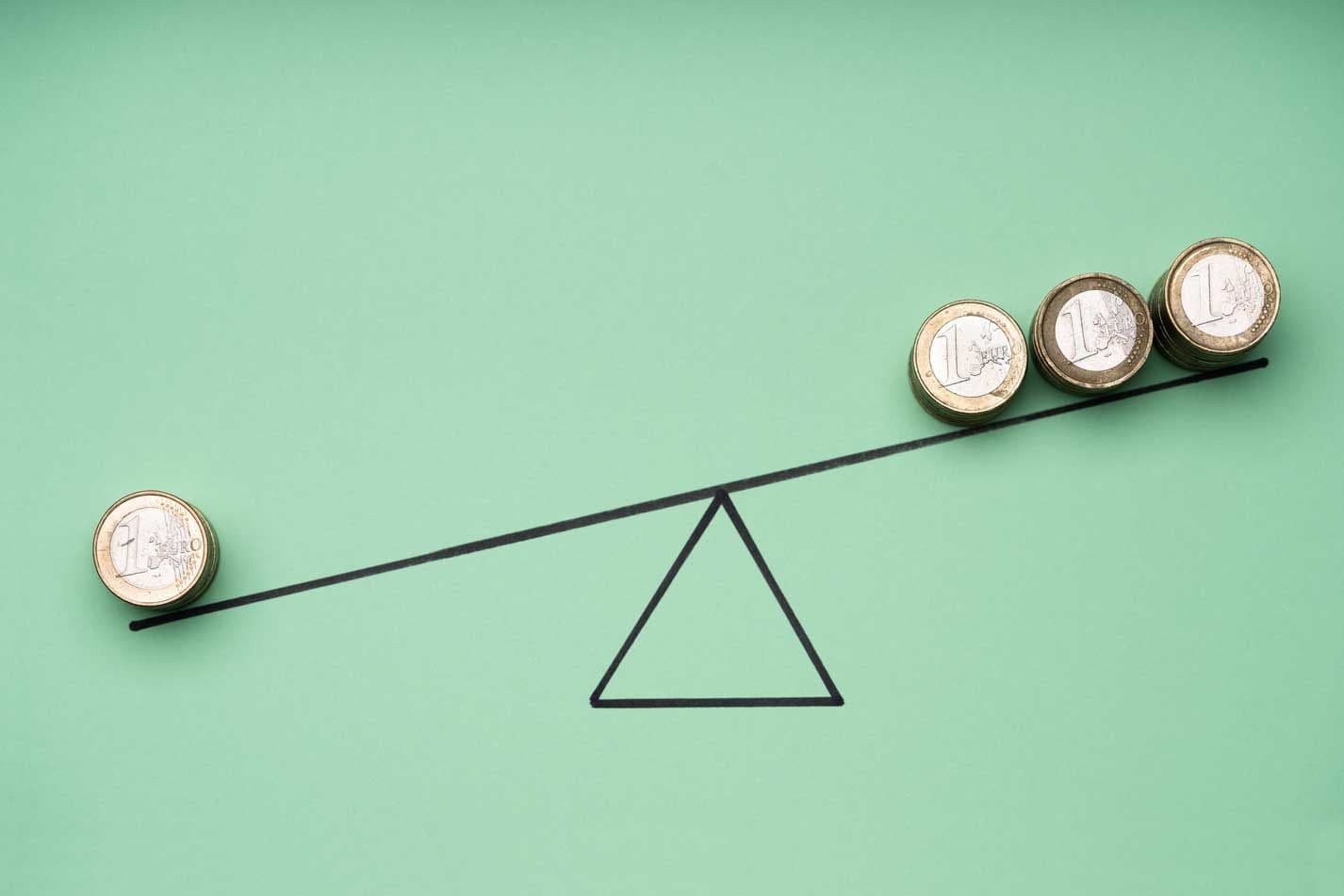
Leverage is borrowed capital that lets you control a position larger than your actual deposit. It is expressed as a ratio. If your broker offers 1:100 leverage, every $1 you deposit controls $100 in the market.
The deposit you put up is called margin. Margin and leverage are inversely related:
- 1:100 leverage = 1% margin required
- 1:30 leverage = 3.33% margin required
- 1:5 leverage = 20% margin required
With $1,000 in your account and 1:100 leverage, you can open a position worth $100,000. With 1:30 leverage, the same $1,000 controls $30,000.
The underlying asset does not change. Leverage changes the size of position your capital can support — and the speed at which your account grows or shrinks.
How Leverage Works: A Worked Example#
Suppose you have a $10,000 account and use 1:100 leverage to open one standard lot (100,000 units) of EUR/USD.
- Margin required: $100,000 / 100 = $1,000
- Free margin: $10,000 − $1,000 = $9,000
- Pip value: $10 per pip for one standard lot of EUR/USD
If EUR/USD moves 100 pips in your favour, you gain $1,000 — a 10% return on your $10,000 account.
If EUR/USD moves 100 pips against you, you lose $1,000 — a 10% loss.
Now consider the same setup but with five lots instead of one:
- Margin required: $5,000
- 100 pips against you = 100 × $50 = $5,000 loss (50% of your account)
The price moved the same 100 pips. The difference is entirely due to position size, which leverage made possible. This is why leverage does not change your expected profit — it changes the magnitude of the outcome in both directions.
Margin Calls and Stop-Outs#
When a leveraged trade moves against you, your account equity drops. Two safety mechanisms exist:
Margin call. A warning triggered when your equity falls to a set percentage of your used margin. The formula is:
Margin Level = (Equity / Used Margin) × 100
Many brokers trigger a margin call at 100% margin level — the point where your equity equals your used margin. This is a warning to add funds or close positions.
Stop-out. The hard floor where the broker automatically closes your positions, starting with the largest loss. Under ESMA and FCA rules, the mandatory stop-out is 50% margin level. Some offshore brokers set it at 20% or even 0%.
Using the earlier example (one lot, $1,000 margin, $10,000 account), the stop-out at 50% would trigger when equity reaches $500 — meaning you would need to lose $9,500 (950 pips) before forced liquidation. But with five lots ($5,000 margin), stop-out triggers at $2,500 equity — just 150 pips of adverse movement.
Leverage Limits by Regulator#
Regulators cap leverage for retail traders to limit risk. These caps are current as of early 2026 and have been verified against official regulatory sources.
EU (ESMA) — in effect since August 2018, made permanent by national regulators#
| Asset Class | Max Leverage | Margin Required | |-------------|-------------|-----------------| | Major forex pairs | 30:1 | 3.33% | | Minor forex, gold, major indices | 20:1 | 5% | | Other commodities, minor indices | 10:1 | 10% | | Individual equities | 5:1 | 20% | | Cryptocurrencies | 2:1 | 50% |
UK (FCA) — identical to ESMA, made permanent in July 2019#
The FCA adopted ESMA's restrictions and has not diverged post-Brexit. All limits above apply. The FCA additionally mandates negative balance protection and a 50% margin close-out rule.
Australia (ASIC) — aligned with ESMA since March 2021#
ASIC implemented leverage restrictions matching ESMA's limits. The product intervention order was extended for five years in 2022, expiring in May 2027. Negative balance protection is also mandated.
United States (NFA/CFTC)#
| Asset Class | Max Leverage | |-------------|-------------| | Major forex pairs | 50:1 | | Minor / exotic forex pairs | 20:1 |
The US does not permit retail CFD trading on stocks, commodities, or crypto. Forex is the only leveraged OTC product available through NFA-registered dealers. Notably, the US does not mandate negative balance protection.
Dubai (DFSA) — aligned with ESMA since December 2021#
The DFSA tightened retail leverage limits to broadly match ESMA's framework: 30:1 on major forex, 20:1 on minors and gold, scaling down to 2:1 on crypto.
Offshore jurisdictions#
Brokers regulated in Seychelles, Belize, Vanuatu, and similar jurisdictions offer leverage of 1:500 to 1:2000 or higher. These regulators generally do not mandate negative balance protection, specific stop-out levels, or leverage caps. The trade-off is clear: higher leverage comes with less investor protection.
Leverage Across Different Asset Classes#
Leverage is not unique to forex. How it works differs by market.
Forex has the highest standard leverage because currency pairs are highly liquid and daily moves are relatively small (typically under 1%). Regulated leverage ranges from 30:1 to 50:1; offshore brokers go much higher.
Stock CFDs are capped at 5:1 (20% margin) under ESMA/FCA/ASIC rules. In the US, traditional margin accounts allow 2:1 leverage (50% initial margin under Regulation T) — this is not CFD trading but margin lending from the broker.
Crypto carries the tightest regulated leverage at 2:1 (50% margin) under ESMA/FCA/ASIC, reflecting the asset class's extreme volatility.
Futures work differently from CFDs. Futures margin is a performance bond — a good-faith deposit set by the exchange (e.g., CME), not a loan from a broker. Initial margin requirements are typically 3–12% of contract notional value, implying effective leverage of roughly 8:1 to 33:1 depending on the contract. A key difference: futures do not offer negative balance protection by default. Losses are settled daily through mark-to-market.
Options provide implicit leverage. You pay a premium (a fraction of the underlying's value) to control exposure to 100 shares per contract. Effective leverage depends on the option's delta and price. An at-the-money call option might provide roughly 10× leverage, while a deep out-of-the-money option provides much more — but with a much lower probability of profit. The maximum loss on a long option is limited to the premium paid.
What Happens When Leverage Goes Wrong#
The Swiss Franc Shock — January 15, 2015#
For over three years, the Swiss National Bank maintained a minimum exchange rate of CHF 1.20 per EUR. Traders treated this as a guaranteed floor and stacked leveraged long positions on EUR/CHF with minimal stop-losses.
On January 15, 2015, the SNB abruptly removed the floor. EUR/CHF plunged from 1.2000 to approximately 0.8500 within minutes — a drop of roughly 30%. Liquidity vanished. Stop-loss orders could not execute because there were no prices to fill them at.
The documented consequences:
- FXCM — $225 million loss; share price fell 90%; required an emergency $300 million bailout
- Alpari UK — declared insolvency the same day
- Citigroup — approximately $150 million loss
- Deutsche Bank — approximately $150 million loss
- IG Group — £30 million loss
Retail traders collectively lost an estimated $400 million or more. Accounts that were leveraged at 100:1 or higher went deeply negative — owing money to brokers. This event was a direct catalyst for ESMA's 2018 leverage restrictions and the introduction of mandatory negative balance protection in the EU, UK, and Australia.
Negative Balance Protection#
Negative balance protection (NBP) means the broker absorbs any loss that exceeds your account balance. You cannot owe the broker money.
| Regulator | NBP Mandated? | |-----------|---------------| | ESMA (EU) | Yes | | FCA (UK) | Yes | | ASIC (Australia) | Yes | | DFSA (Dubai) | Yes | | NFA/CFTC (US) | No | | Offshore (Seychelles, Belize, etc.) | No (some brokers offer it voluntarily) |
If you trade with an offshore broker offering 1:1000 leverage without NBP, an event like the Swiss franc shock could leave you owing significantly more than your deposit.
Professional Client Status#
In the EU and UK, traders can apply for professional client status to access higher leverage (100:1 or more, depending on the broker). You must meet at least two of the following three criteria:
- Portfolio size — financial instruments and cash deposits totalling EUR 500,000 or more
- Professional experience — at least one year in a financial services role requiring knowledge of leveraged products
- Trading activity — at least 10 transactions of significant size per quarter over the previous four quarters
By reclassifying, you gain higher leverage but lose negative balance protection, the 50% margin close-out guarantee, and certain complaint rights. This trade-off is intentional — the higher leverage is available specifically because you are acknowledging greater risk.
Common Misconceptions#
- "Higher leverage means more profit." Higher leverage amplifies both gains and losses equally. A 1% price move with 100:1 leverage means a 100% gain — or a 100% loss. The expected profit does not change; only the risk does.
- "I need high leverage because I have a small account." This is the most dangerous reasoning. A $1,000 account with 1:500 leverage trading one standard lot means a 50-pip adverse move wipes out half the account. Proper position sizing — risking 1–2% per trade — means trading micro lots on a small account, not maximising leverage.
- "Leverage is free." Holding a leveraged position overnight incurs swap (financing) costs on the full notional value, not just your margin. With 30:1 leverage on a $30,000 position, you pay overnight interest on the full $30,000. Higher leverage means a larger notional position and higher overnight costs. For positions held for days or weeks, swap fees can become a significant expense.
Key Takeaways#
- Leverage lets you control a larger position than your deposit — but it amplifies losses just as much as gains
- Margin is the inverse of leverage: 1:30 leverage requires 3.33% margin
- Regulated leverage caps range from 2:1 (crypto in EU) to 50:1 (major forex in the US); offshore brokers go much higher at the cost of investor protection
- A margin call warns you; a stop-out forces position closure — know your broker's levels before trading
- Negative balance protection is mandated in the EU, UK, and Australia but not in the US or most offshore jurisdictions
- The 2015 Swiss franc shock remains the clearest demonstration of what happens when high leverage meets a liquidity vacuum
- Position sizing matters more than leverage ratio — risk a fixed percentage of your account per trade, not the maximum your leverage allows