Introduction#
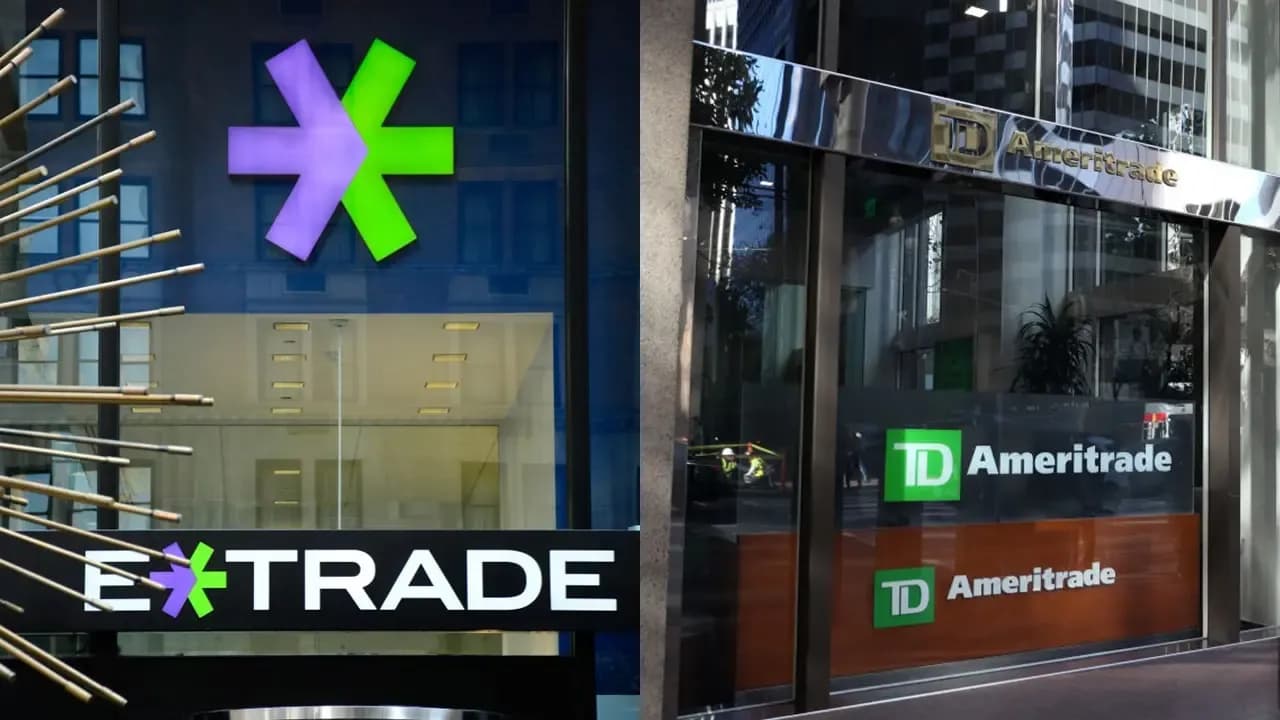
*ETRADE and TD Ameritrade* were once direct competitors — two of the most recognized brokerage names in the United States. That changed with two major acquisitions: Charles Schwab completed its acquisition of TD Ameritrade in 2020, and Morgan Stanley acquired ETRADE in the same year.
By 2026, the landscape looks very different. TD Ameritrade accounts have been migrated to Schwab. ETRADE operates under Morgan Stanley's umbrella. The question of ETRADE or Ameritrade* is now really a question of ETRADE (Morgan Stanley) vs Charles Schwab — and whether the platforms that made each broker famous still deliver.
What Happened to TD Ameritrade#
Charles Schwab acquired TD Ameritrade for approximately $26 billion in 2020. Client account migration was completed in 2024. TD Ameritrade as a standalone brand no longer exists for new account openings.
What survived: The thinkorswim platform — TD Ameritrade's flagship trading platform — was kept by Schwab and is now available to all Schwab clients. This was the single most important retention from the acquisition, as thinkorswim is widely regarded as one of the best options and futures platforms available to retail traders.
What changed: TD Ameritrade's website, branding, and account infrastructure were absorbed into Schwab. Former TD Ameritrade clients now hold Schwab accounts with Schwab's fee schedule, research, and banking integration.
What Happened to E*TRADE#
Morgan Stanley acquired ETRADE for approximately $13 billion in 2020. Unlike the Schwab/Ameritrade merger, Morgan Stanley has maintained ETRADE as a distinct brand — it still operates etrade.com with its own platform and account experience.
What changed: ETRADE clients gain access to Morgan Stanley's research and some wealth management services. Morgan Stanley's institutional expertise has been partially integrated into ETRADE's offering, particularly in workplace stock plan management (E*TRADE has been a major provider of stock options administration for corporate employees).
What stayed the same: ETRADE's Power ETRADE platform, mobile app, and core brokerage services continue to operate under the E*TRADE name.
Platform Comparison#
*ETRADE (Morgan Stanley)**
- Power E*TRADE — web-based platform with options chain, risk/reward visualizer, and streaming quotes
- E*TRADE mobile app — clean design, supports options trading
- No thinkorswim, no desktop platform equivalent to TWS
- 155 technical indicators on Power E*TRADE
Charles Schwab (formerly TD Ameritrade)
- thinkorswim — desktop, web, and mobile versions
- 155 technical indicators, 85 drawing tools, 63 order types
- paperMoney — free paper trading simulator
- Schwab.com — standard web-based trading for buy-and-hold investors
- StreetSmart Edge — Schwab's legacy platform (less used since thinkorswim integration)
For active traders and options traders, thinkorswim is the decisive advantage. Its charting, options analysis, and strategy building tools are deeper than what Power E*TRADE offers. For casual investors who want a straightforward buy-and-hold experience, both platforms are adequate.
Pricing#
Both brokers have converged on the same commission structure:
Stocks and ETFs
- E*TRADE: $0 per trade
- Schwab: $0 per trade
Options
- E*TRADE: $0.65 per contract ($0.50 for 30+ trades/quarter)
- Schwab: $0.65 per contract
Futures
- E*TRADE: $1.50 per contract
- Schwab: $2.25 per contract (lower with thinkorswim legacy pricing for migrated accounts)
Mutual funds
- E*TRADE: 6,400+ no-transaction-fee funds
- Schwab: 4,000+ no-transaction-fee funds, plus Schwab's own low-cost index funds
Margin rates (first $25,000)
- E*TRADE: 12.20%
- Schwab: 12.325%
Pricing is nearly identical for stocks and options. E*TRADE has a slight edge on futures contracts and offers more no-transaction-fee mutual funds. Neither broker comes close to Interactive Brokers' margin rates (5.83% on IBKR Pro).
Account Types and Minimums#
Both brokers offer the full range of US account types:
- Individual and joint brokerage accounts
- Traditional IRA, Roth IRA, Rollover IRA
- 529 college savings plans
- Custodial accounts (UGMA/UTMA)
- Trust accounts
*ETRADE**: $0 minimum for most accounts. Managed portfolios start at $500 (Core Portfolios) or $25,000 (Blend Portfolios with Morgan Stanley advisory).
Schwab: $0 minimum for most accounts. Schwab Intelligent Portfolios (robo-advisor) requires $5,000.
Research and Education#
*ETRADE** provides:
- Morgan Stanley research reports
- Independent research from multiple providers
- E*TRADE's in-house market commentary
- Knowledge center with articles and videos
- Relatively strong stock plan/workplace education (corporate stock options, RSUs)
Schwab provides:
- Schwab's in-house Schwab Center for Financial Research
- Independent research from Morningstar, CFRA, Market Edge, Ned Davis
- Schwab Network (live video market commentary)
- Extensive educational content, including courses and coaching sessions
- thinkorswim's built-in scanning and learning tools
Schwab's educational offering is broader, particularly for newer investors. The thinkorswim platform itself functions as a learning tool through paperMoney simulation. E*TRADE's research is enhanced by Morgan Stanley's institutional analysis but is less accessible to beginners.
Banking and Cash Management#
*ETRADE**: Offers a brokerage cash management account. FDIC-insured through Morgan Stanley Private Bank up to $500,000 (through sweep arrangements). Bill pay, debit card, and ATM access.
Schwab: Full banking services through Charles Schwab Bank. High-yield investor checking account with unlimited ATM fee rebates worldwide. FDIC-insured savings. Integration between brokerage and banking is seamless — a meaningful advantage for clients who want one financial institution for everything.
Schwab's banking integration is significantly stronger. If consolidating brokerage and banking matters, Schwab is the clear choice.
Who Each Broker Suits Best#
*Choose ETRADE (Morgan Stanley) if:**
- You hold stock options or RSUs through an employer that uses E*TRADE for stock plan administration
- You want access to Morgan Stanley's wealth advisory services at lower minimums
- You prefer a simpler platform for buy-and-hold investing
- You trade futures and want lower per-contract fees
Choose Schwab (formerly TD Ameritrade) if:
- You want thinkorswim — the strongest retail trading platform for options and active trading
- You value paperMoney for strategy testing
- You want integrated banking (checking, savings, debit card, ATM rebates)
- You want the broadest research and educational library
- You were a former TD Ameritrade client already familiar with the thinkorswim workflow
Key Takeaways#
- TD Ameritrade no longer exists as a standalone broker — all accounts migrated to Charles Schwab by 2024, but thinkorswim was preserved
- ETRADE operates under Morgan Stanley* with enhanced research and wealth advisory, but maintains its own brand and platform
- Pricing is nearly identical: $0 stock/ETF trades, $0.65 per options contract at both
- thinkorswim gives Schwab the edge for active and options traders; ETRADE's Power ETRADE is simpler but less powerful
- Schwab offers superior banking integration with checking, savings, and global ATM rebates
- ETRADE has an edge in workplace stock plan management — if your employer uses ETRADE, staying may be simplest
- Compare both with other top brokerages on Investucate's broker comparison page